The Sleep Checklist That Actually Works (Backed by Real Research)

Forget miracle routines. Ten evidence-based habits — plus the one mistake that undoes all of them.
Sleep advice tends to oscillate between obvious ("get enough sleep") and pseudoscientific ("eat these four foods"). The evidence-based version is neither: a short list of habits with real research behind them, ordered by how much they actually matter. Plus the one mistake that quietly undoes all of them.
The checklist, ordered by impact
1. A consistent wake time — even weekends. The highest-impact habit on the list. Your body clock responds to consistency more than to duration; a stable wake time regulates the entire sleep-wake system, making every other habit work better.
2. Bed means sleeping. If you lie awake roughly twenty minutes, get up, sit somewhere dim and boring, return when sleepy. This protects the learned link between bed and sleep — the link insomnia quietly breaks.
#1 habit
consistent wake time — it regulates the entire sleep system
20 min
awake in bed → up. Protect the bed-means-sleeping link
1 hour
the maximum weekend lie-in before jet lag starts
3. Park the worries. Notepad by the bed: one line per open worry, one line for tomorrow's first task. Minds stop rehearsing what is reliably written down.
4. Cool, dark, quiet. Bodies fall asleep cooler than most people keep their rooms. Darkness and quiet are obvious but under-implemented.
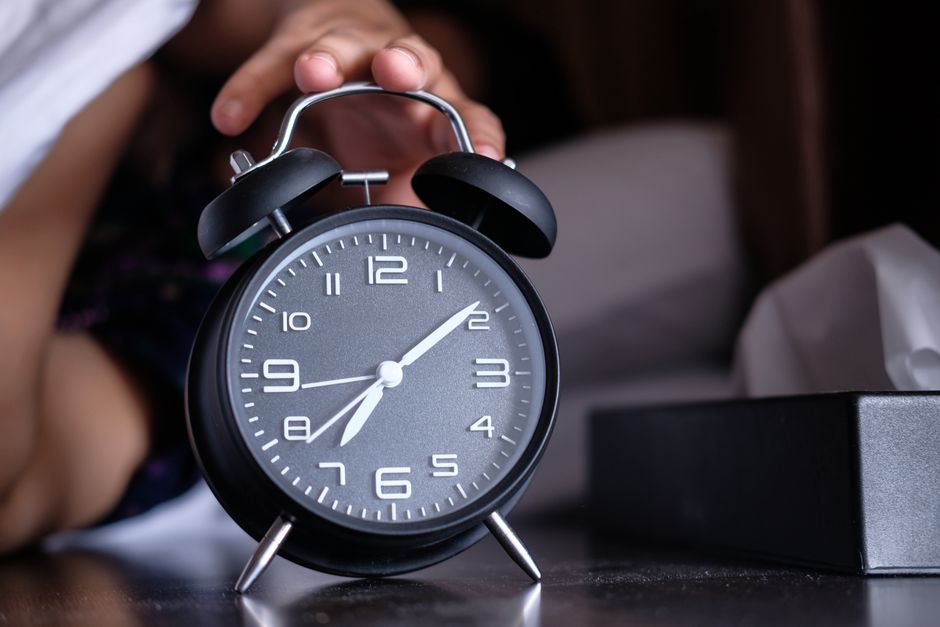
5. Daylight in the morning. Ten minutes of outdoor light soon after waking sets the body clock that sleep runs on. This one habit improves both falling asleep and waking.
6. Movement during the day. Regular movement deepens sleep — just finish vigorous sessions a few hours before bed.
The weekend undo
Sleeping in two hours on Saturday gives your body clock jet lag — Sunday night insomnia and Monday fog follow. One hour past usual is the safe limit.
7. Caffeine's half-life. Five to six hours. The 4pm coffee is still half-present at 10pm. If sleep is fragile, cut caffeine after mid-afternoon.
8. Screens dimmed before bed. Bright light and stimulating content re-engage the alarm system. Dim, slow inputs for the last half hour.
| Habit | Why it works | Difficulty |
|---|---|---|
| Consistent wake time | Regulates the body clock | Hard but #1 |
| Bed means sleeping (20-min rule) | Protects the learned link | Medium |
| Worry notepad | Stops the rehearsal | Easy, high payoff |
| Cool, dark, quiet | Body conditions | Easy |
| Morning daylight | Sets the clock that sleep runs on | Easy |
| No caffeine after mid-afternoon | 5-6 hr half-life | Hard |
| Screens dimmed before bed | Disengages the alarm | Medium |
| Short, early naps only | Preserves sleep pressure | Easy |
The checklist at a glance.
9. Alcohol is a sleep thief. It sedates you into sleep, then fragments the second half of the night. What feels like falling asleep faster is really trading away sleep quality.
10. The nap rule. Short (20-30 minutes) and before mid-afternoon, or skip it. Long, late naps eat the sleep pressure your night depends on.
The one mistake that undoes everything

Catching up at the weekend. Sleeping in two hours on Saturday gives your body clock a dose of jet lag — Sunday night becomes insomnia, Monday becomes fog, and the whole week's rhythm is off. Recovery sleep only partly restores quality; consistency beats feast-and-famine every time. If you must sleep in, limit it to one hour past your usual wake time.
If the checklist is not enough
Self-reported effect after one month of the top-4 habits
Illustrative averages from sleep surveys.
If you do most of this for a month and sleep is still broken more than three nights a week, bring in a professional. Persistent insomnia is highly treatable — the structured version of exactly these habits (plus a therapist to work on the racing-mind side) resolves it for most people who stick with it. Sleep advice tends to oscillate between obvious ("get enough sleep") and pseudoscientific ("eat these four foods"). The evidence-based version is neither: a short list of habits with real research behind them, ordered by how much they actually matter.
Do not attempt all ten habits at once — that path leads to a perfect week followed by abandonment. Pick two: the consistent wake time first, because it anchors everything else, plus whichever habit targets your worst symptom — the notepad if thoughts keep you up, the 20-minute rule if you lie awake in bed, morning daylight if you feel foggy on waking. Run just those two for a month. Habits added in pairs survive; habits added in dozens do not. Once the first two feel automatic, add one more — the checklist is a menu, not a syllabus, and consistency with a short list beats perfectionism with a long one. The goal is not a flawless routine. It is nights that mostly work, built from habits you barely notice keeping.
One more finding worth knowing, because it reframes the bad nights: one broken night is survivable, and knowing this removes the anxiety that makes broken nights worse. The body's sleep system is resilient — one short night costs you some afternoon fog, and the following night's sleep pressure rebuilds automatically, deeper than usual. The damage comes not from the single bad night but from the anxiety spiral around it: "I won't sleep tonight either," which spends sleep pressure on wakefulness and teaches the wrong lesson in bed. This is why the 20-minute rule and the notepad pair so well: they remove the two main anxiety fuel sources — the wakefulness in bed and the unpriced worries — before the spiral can start. Expect a perfect week followed by an ordinary night; the checklist is a menu, not a syllabus. Add habits in pairs, once the first two feel automatic, and let consistency with a short list beat perfectionism with a long one. The goal is nights that mostly work, built from habits you barely notice keeping.