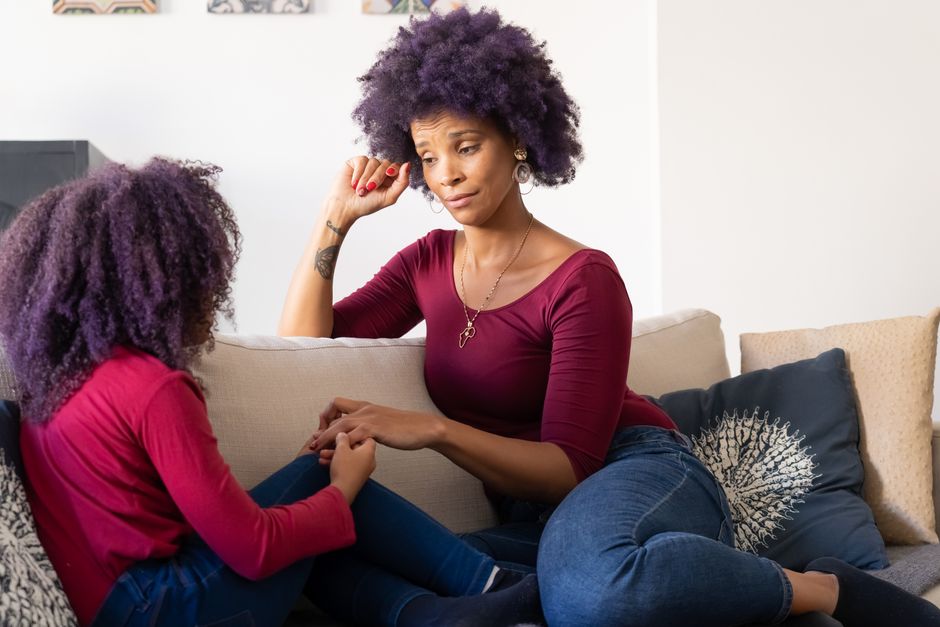
Asking for Help Is a Superpower, Not a Weakness

The strongest people aren't the ones who cope alone — they're the ones who know when to reach out.
There's a stubborn myth that strong people handle everything alone. In reality, the opposite is true. The people who cope best with life's ups and downs are the ones who ask for help early.
Think about how we learn everything else
Nobody expects you to teach yourself to swim or play an instrument without guidance. Yet somehow, when it comes to feelings, people think they should figure it out solo. Feelings are skills too — and skills grow faster with a coach.
1 sentence
is a complete ask — no speech or explanation required
Most
people rate the reaction they get as kinder than they feared
Sooner
asking early keeps problems small enough to solve
Part of the myth is cultural. Many of us grew up with messages like "tough it out", "don't air your dirty laundry", or "other people have it worse". Those sayings sound like strength, but they're actually instructions to suffer quietly. Notice that we don't apply the same logic anywhere else: nobody believes a person who refuses a maths tutor is stronger than one who accepts help, and nobody admires a driver who won't ask for directions to prove a point.
There's also a practical irony: asking for help is a skill that improves with practice, and each practice makes the next one easier. People who reach out early build a life with more safety nets, and safety nets paradoxically make people bolder — it's easier to try, risk, and recover when you know there's somewhere to land.
What asking for help actually looks like

It doesn't have to be dramatic. It can be:
- Telling a parent, "I've been feeling stressed lately"
- Messaging a therapist about a worry that keeps coming back
- Saying to a teacher, "Can I talk for a minute?"
- Texting a friend, "Rough week. Got 10 minutes?"
The 10-second rule
When you notice yourself struggling, give yourself ten seconds to send one message before the mental debate starts. The debate is the delay; the ask itself takes seconds.
Each of these is small, brave, and effective. Notice that none of them requires you to have the right words, a clear explanation, or even to know what's wrong. "I don't feel like myself lately" is a complete sentence and a legitimate reason to reach out.
The smallest version counts most. Waiting until you have a dramatic speech prepared is one of the most common ways people delay for months. The magic threshold is much lower than most people imagine: one honest sentence, to one person, today.
What happens when you don't
| Stage | What you tell yourself | Break the arc with |
|---|---|---|
| Week 1 | 'It's not a big deal' | One sentence to anyone |
| Week 4 | 'Too much time has passed' | 'This is late, but I wanted to say...' |
| Month 3 | 'Explaining it is exhausting' | Start with the feeling, not the history |
| Month 6 | 'They won't get it' | Talk to a professional — that IS their job |
The silence arc — and where to break it.
Unspoken worries tend to grow. Small stresses pile up like unopened mail. Reaching out early keeps the pile small — and keeps you feeling in control.

There's a predictable arc to silence. It starts with "it's not a big deal". Then it becomes "I should have said something sooner, so it's awkward now". Then it becomes "I've carried this so long that explaining it all feels exhausting". By the end of the arc, the original problem has collected layers of shame and fatigue that take far longer to untangle than the problem itself ever would have.
Meanwhile, the people around you usually have no idea. Most friends and family genuinely want to help but won't pry — they're waiting for a signal, and silence reads as "everything's fine". Your one sentence might be the signal they've been hoping for.
Why the response is usually better than feared
What people feared about asking vs. what actually happened
Illustrative comparison of predicted vs. experienced reactions.
Fear of reaching out usually has three parts: "they'll think I'm weak", "they'll be annoyed", and "they won't get it". In practice, all three are much rarer than feared. Studies of help-seeking consistently find that people rate the reactions they receive as more supportive than they predicted. And the person you ask is usually flattered — being trusted with someone's struggle is a compliment, not a burden.
Worst case, one person doesn't respond well. That says something about their capacity that day, not about the value of your need. The fix is to ask someone else, not to conclude that asking was wrong.
Asking for help doesn't make you weak, dramatic, or a bother. It makes you someone who takes care of their mind the way they take care of their body. That's a superpower worth practising.
Practise the skill in small sizes before you need it in large ones. The ask — like any exposure — generalises: each small, successful request recalibrates your expectations of what asking costs. Send the low-stakes message this week, ask the small favour, say the one true thing to one person. The habit you are building is not dependence; it is the opposite — a mind that knows how to use the support systems humans are built for, before a crisis makes the lesson urgent. The people who ask early are the people who rarely have to ask heavy.
Practise the skill in small sizes before you need it in large ones. The ask — like any exposure — generalises: each small, successful request recalibrates your expectations of what asking costs. Send the low-stakes message this week, ask the small favour, say the one true thing to one person. The habit you are building is not dependence; it is the opposite — a mind that knows how to use the support systems humans are built for, before a crisis makes the lesson urgent. The people who ask early are the people who rarely have to ask heavy. And if the asking muscle starts weak — as it does for most of us — that is normal and temporary: a few weeks of small asks is usually enough to feel the difference, the same curve as any other practice. Worth knowing, too: asking early keeps problems small, and small problems are easier for everyone to help with. The strongest askers you know were not born that way; they practised in sizes nobody noticed.
Frequently Asked Questions
Almost never. Research on help-seeking shows people expect far more judgment than they receive. Most people are simply glad you trusted them — and if one person responds badly, that reflects their day, not your worth.
You don't need a diagnosis to ask for company. 'I feel off and I don't know why' is a complete sentence. Sorting out what's wrong is exactly what conversations and therapists are for — you're not required to arrive with answers.
Name the size of what you need: 'Do you have 10 minutes? Nothing huge, just a rough week.' Giving people a small, concrete ask makes it easy to say yes — and most people will.
They do different jobs. Friends give belonging and comfort; professionals give trained techniques and consistency. Early and everyday struggles can start with either — and many people use both, which is the strongest combination.
One bad experience is a data point about one person, not proof that asking fails. Try someone different, or start with a therapist, where the response is reliably supportive because listening is the service.
Treat it like exposure training: start with tiny, low-stakes asks (a small favour, a quick question), and notice that the world doesn't end. Each successful ask recalibrates your expectations, and the habit generalises to the harder ones.