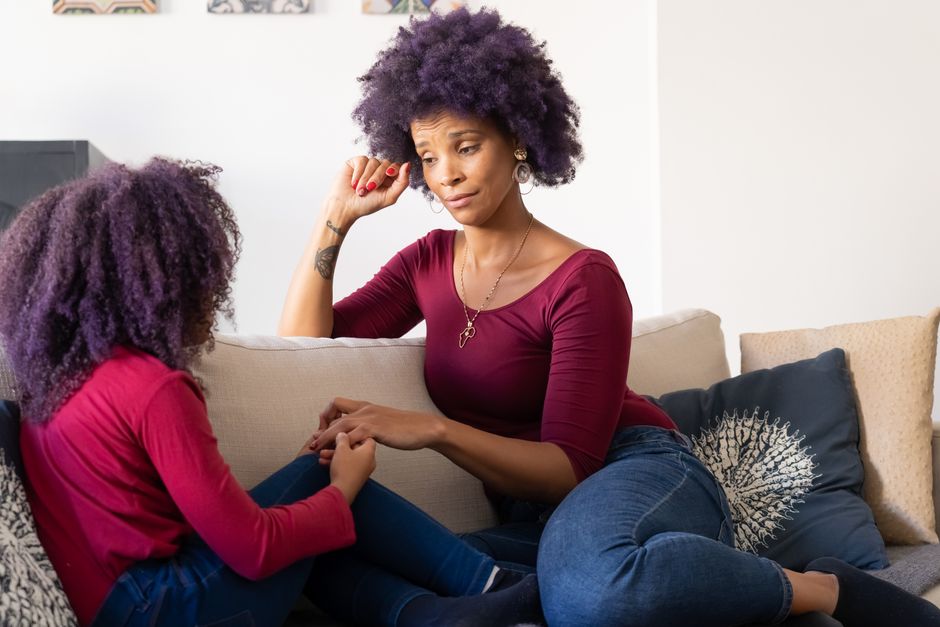
Therapy That Works for the Whole Family

Kids, teens, and adults all benefit from support — and modern platforms make it easy for every age to join in.
Feelings don't have an age limit. Kids worry about friendships and tests. Teens juggle identity and pressure. Adults carry work, money, and family stress. Every member of a family can benefit from someone safe to talk to.
For kids
Young children feel big emotions but don't always have the words for them. Talking with a supportive listener helps them learn to name feelings — and naming feelings is the first step to managing them. Good conversations for kids are simple, warm, and free of anything awkward or grown-up.
1st
step for kids: learning to NAME a feeling before managing it
Writing
is the format many teens find easiest for opening up
Weekly
family check-ins measurably improve household communication
The developmental science here is heartening: emotional vocabulary is one of the strongest predictors of later resilience. A child who can say "I'm frustrated because my tower fell" is measurably calmer, and recovers faster, than a child experiencing the same feeling namelessly. Every naming conversation is a small deposit into that vocabulary.
Age-appropriate support looks different from adult therapy. It uses simple words, short exchanges, concrete examples from the child's actual day — the puzzle that wouldn't fit, the friend who didn't share — and absolute predictability of tone. Nothing about the conversation should feel like a test or a lecture.
For teens

Teens often find it easier to open up in writing than face-to-face. That's where digital support shines: no eye contact needed, no fear of being judged by someone at school. Having a private space to sort through stress can make home and school life smoother.
The oxygen-mask principle
Children read adult stress even when it's unspoken. A parent with their own outlet isn't self-indulgent — it's household infrastructure.
Adolescence is a perfect storm for emotional load: a remodelling brain (the emotional centres mature years before the braking systems), intense social stakes, identity questions, and academic pressure — all while sleep runs chronically short. The intensity teens feel isn't attitude; it's architecture.
The written format also respects the developmental task of the age. Teens are building an independent self, and being able to talk without a parent arranging it, driving it, or hearing about it afterwards matters enormously. Privacy isn't rebellion; it's the workspace where an independent mind gets built.
For adults
| Age | What they struggle with | What helps most |
|---|---|---|
| Kids | Naming big feelings; testing boundaries | Simple words, warmth, consistency, short exchanges |
| Teens | Identity, social pressure, academic stress | Written format, privacy, being heard without lectures |
| Adults | Load, patience, no outlet of their own | Their own listener outside the family system |
What good support looks like at each age.
Parents often spend so much time caring for everyone else that their own stress goes untended. But kids notice when adults are overwhelmed. When parents get support too, the whole household often feels calmer.

This is the "oxygen mask" principle, and it's backed by research on emotional contagion: children are remarkably sensitive barometers of the adults around them. A parent's unmanaged stress leaks into tone, patience, and availability even when the words say "I'm fine". Conversely, a parent who has an outlet — someone to talk to who isn't inside the family system — tends to have more patience where it counts.
Adult support also models the behaviour you want children to adopt. A child who watches a parent say "I had a hard day, I'm going to have a chat with my therapist" absorbs a lesson no lecture could teach: that tending your mind is normal, routine maintenance.
One family habit worth trying
What family members say they want from support (share agreeing)
Illustrative survey of family communication preferences.
Try a weekly "feelings check-in" where everyone shares one high and one low of the week — no fixing, no lectures, just listening. Pair that habit with professional support when anyone needs more, and you build a home where feelings are welcome.
The rules matter more than the format. Everyone participates, including adults. No one interrupts, corrects, or problem-solves unless asked. Feelings shared in the check-in are never used as ammunition later — that single rule, kept consistently, is what makes the ritual safe rather than performative. Families who keep this habit report that it does quiet work all week: problems surface earlier, and "how are you" stops being a formality.
A last note for the adults in the house: your support has a foundation, and the foundation is your own somewhere. Adults who have their own outlet — a therapist, a written conversation, an honest friend — report more patience for everyone else's feelings, because their tank is not empty and their own unspoken worries are not competing for attention. The check-in ritual works best when the grown-ups participate not as supervisors but as members: your high and your low, shared like everyone else's, is what teaches the house that this is a language everyone speaks rather than a lesson the children receive. Support the family by being supported yourself.
A last note for the adults in the house: your support has a foundation, and the foundation is your own somewhere. Adults who have their own outlet — a therapist, a written conversation, an honest friend — report more patience for everyone else's feelings, because their tank is not empty and their own unspoken worries are not competing for attention. The check-in ritual works best when the grown-ups participate not as supervisors but as members: your high and your low, shared like everyone else's, is what teaches the house that this is a language everyone speaks rather than a lesson the children receive. Support the family by being supported yourself. And if one member of the household resists the ritual — as someone always does, in every family — keep the door open without pushing: consistency without pressure is what resistance responds to, in children and adults alike. The families who benefit most are not the ones who do the ritual perfectly; they are the ones who keep it going, imperfectly, long enough for it to become furniture.
Frequently Asked Questions
Age-appropriate platforms designed for young people are simple, safe, and supervised — nothing adult-themed, nothing that isn't warm and easy to understand. Parents should always check what's offered and choose services built with young users in mind.
Some pulling away is healthy development, not rejection — teens are practising independence. What matters is that they have SOMEWHERE to talk. A written, private option often succeeds where face-to-face conversation stalls.
Go first, every time, and keep it light: 'My high was the walk on Saturday, my low was Wednesday's traffic.' Don't quiz anyone else. After two or three weeks of consistency, participation usually follows on its own.
Stay calm and thank them — the bravery of sharing matters more than your first reaction. Take it seriously, don't dismiss or panic, and follow up with appropriate support. Getting professional guidance is the right move for anything beyond ordinary ups and downs.
It depends on the household, but many families find separate spaces work better — everyone deserves a listener who isn't inside the family system. The important part is that every member has some outlet, not that they share one.
Watch for changes that last: sleep, appetite, withdrawal from things they enjoyed, or a drop in functioning that persists over weeks. Those are signals worth a professional conversation — early support is easier than late support.