How a Therapy Platform Works (And Why That Matters)

Online therapy platforms connect you with support in minutes — no waiting rooms, no travel, no appointments to book.
Getting help used to mean phone calls, waiting lists, and travelling to an office. Therapy platforms changed that. Here's how they work and why it makes a difference.
Support in minutes, not months
With a therapy platform, you can start a conversation whenever you need it. There's no appointment to schedule and no waiting room to sit in. If you're feeling anxious at 10 at night, help is right there.
That timing matters more than it sounds. Emotional crises don't keep office hours — they tend to arrive late at night, early in the morning, or in the middle of an ordinary Tuesday. Research on mental health hotlines shows that the moment someone decides to reach out is a narrow window: if support isn't available in that moment, many people simply don't try again. Platforms close that gap by being there whenever the window opens.
Minutes
typical time from opening the site to your first conversation
24/7
access, because difficult moments don't keep office hours
0
cost to start your first conversation on MondayTherapy
There's a practical side too. The average wait for a first appointment with a traditional therapist can stretch from a few weeks to a few months depending on where you live. That's a long time to sit with a problem that is growing. A platform shortens that to minutes, which means you get help while the problem is still small.
You choose who you talk to
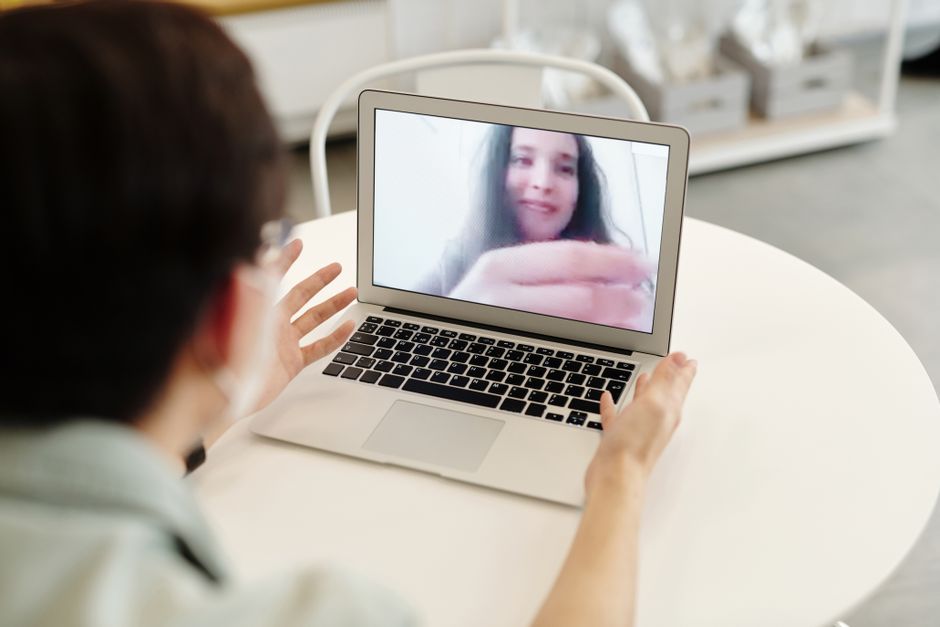
Platforms let you pick a therapist whose style suits you. Maybe you want someone calm and gentle, or someone upbeat who helps you find solutions. Being able to choose makes it easier to open up.
This is closer to how we choose every other professional in our lives. You wouldn't hire the first personal trainer you met at random, and the same logic applies to therapy. One person responds best to structured, logical guidance; another wants warmth and encouragement first. Neither is wrong — they're just different fits.
The ability to switch matters as much as the ability to choose. On a platform, if a therapist's style doesn't click with you after a few conversations, you can try another without the awkwardness of formally "ending" anything. That low-stakes experimentation means people are far more likely to land with someone they genuinely connect with — and the connection itself is one of the strongest predictors of therapy working.
Private and judgment-free
Why typing feels easier
Psychologists call it the online disinhibition effect: the slight distance of a screen lowers self-consciousness, which is why so many people find it easier to write honestly than to speak. It's not avoidance — it's a different, often faster, route to openness.
Some people find it easier to type how they feel than to say it out loud. On a platform, you can share as much or as little as you want, from the comfort of your own space. Good platforms keep conversations private and secure.
Typing changes the experience in a subtle way. Without someone watching your face, many people find they can say the honest thing — the thing they'd stumble over in a room. There's even a name for this in research: the "online disinhibition" effect, where the small distance of a screen lets people open up faster. For anyone who feels self-conscious, that distance can be the difference between talking and not talking.
| Traditional practice | Therapy platform | |
|---|---|---|
| First contact | Weeks to months of waiting | Minutes |
| Availability | Office hours | Any time, any day |
| Location | Travel to an office | Your own space |
| Switching therapists | Formal, awkward process | One click |
| Cost to try | Full session fee | Free to start |
Traditional therapy vs. a therapy platform at a glance.
Privacy also works in the small moments. No waiting in a hallway where a neighbour might see you. No explaining to an employer why you left the office early. Support that happens in your own room, on your own device, removes a whole layer of social friction that stops many people from ever starting.
Easier on the wallet

Traditional therapy can be expensive, and not everyone has insurance that covers it. Because platforms don't need offices and receptionists, support usually costs much less — and many offer free options to start.
The savings come from structure. A traditional practice has rent, front-desk staff, and a provider who can only see one client per hour. A platform shares its costs across many users, offers free conversation time to let people try before paying, and typically charges a flat monthly rate instead of a per-session fee. For someone who wants to talk a few times a week, that difference is enormous: the cost of one in-office session can cover a month of platform access.
Free access matters for a second reason: it removes the risk of "wasting money" on something you're not sure about. If you can talk for free and decide later whether to subscribe, the only thing you've spent is a few minutes of honesty.
What a platform can and can't do
Where people say online support beats the traditional route
Share of platform users rating each benefit as important in their choice (illustrative).
Honesty here matters. A therapy platform is excellent for everyday worries, stress, low mood, sleep trouble, relationship friction, and the general weight of life. It is not a replacement for emergency care. If you or someone near you is in danger, crisis lines and emergency services are the right answer, and good platforms will say so plainly and point you there.
What platforms do brilliantly is the middle ground — the 90% of life's struggles that are real and heavy but not emergencies. For that enormous territory, being able to talk today, for free, from your own room, is a genuine step change in how people access support.
A therapy platform isn't a replacement for a doctor or a crisis service, but for everyday worries, stress, and big feelings, it puts support within reach of almost anyone.
Frequently Asked Questions
Usually not. MondayTherapy runs in your browser on any phone, tablet, or computer. You open the site, pick a therapist, and start typing — nothing to download or set up.
Yes. Your chats are stored securely and are not visible to anyone but you and the service. Reputable platforms use encrypted connections, the same standard used by banks for online banking.
Yes. On a platform, changing therapists is as simple as picking another one from the list. There's no formal ending, no awkward conversation, and no penalty — you simply keep your history and try a new style.
It varies by platform. MondayTherapy has a free tier so you can keep talking at no cost, with paid plans that add more weekly messages and extras. You never need to pay to find out whether it helps you.
A good platform will direct you to emergency resources immediately — crisis lines like 988 in the US, or your local emergency number. Platforms are for everyday support; crises deserve real-time human help, and any responsible service will say so clearly.
For many everyday concerns, studies find written therapy produces similar improvements to in-person work — and some people progress faster in writing because they can reread their sessions and take more time to express themselves.